Hey there! As a supplier of API 602 forged valves, I often get asked if these valves can be used in oil and gas downstream applications. Well, let's dive right into it and explore this topic in detail.
First off, let's understand what API 602 forged valves are. API 602 is a standard set by the American Petroleum Institute (API) for forged steel gate, globe, and check valves. These valves are designed to meet the specific requirements of the oil and gas industry, ensuring high - quality and reliable performance.
In the oil and gas downstream sector, we're talking about activities like refining crude oil into products such as gasoline, diesel, and jet fuel, as well as the storage and distribution of these refined products. There are some unique challenges and requirements in this environment. For instance, the fluids being handled can be highly corrosive, under high pressure, and at elevated temperatures. So, the valves used need to be able to withstand these harsh conditions.
Corrosion Resistance
One of the key factors in oil and gas downstream applications is corrosion resistance. API 602 forged valves are often made from high - quality materials such as carbon steel, stainless steel, and alloy steel. These materials offer excellent resistance to corrosion from the various chemicals and hydrocarbons present in the refined products. For example, stainless steel valves can resist the corrosive effects of sulfur - containing compounds that are often found in refined fuels. This means that the valves can have a longer service life, reducing the need for frequent replacements and maintenance.
Pressure and Temperature Ratings
The downstream processes in the oil and gas industry often involve high pressures and temperatures. API 602 forged valves are designed to handle these extreme conditions. They are engineered to have high - pressure ratings, which means they can safely control the flow of fluids even when the pressure is significant. Similarly, they can operate at elevated temperatures without losing their structural integrity or functionality. This is crucial because any failure of a valve due to pressure or temperature issues can lead to serious safety hazards and production disruptions.
Types of API 602 Forged Valves for Downstream
Let's take a look at the different types of API 602 forged valves and how they can be used in downstream applications.
API 602 Forged Check Valves
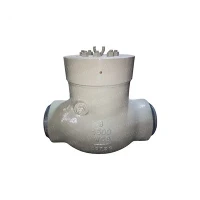
API 602 Forged Check Valves are essential for preventing backflow in the pipelines. In the oil and gas downstream, backflow can cause contamination of products, damage to equipment, and even safety risks. These check valves automatically open when the fluid is flowing in the correct direction and close when the flow reverses. They are designed to be reliable and have a tight shut - off, ensuring that there is no leakage of the valuable refined products.
API 602 Forged Gate Valves
API 602 Forged Gate Valves are commonly used for on - off service in the pipelines. They provide a full - bore opening when fully open, which minimizes pressure drop and allows for efficient flow of the fluids. In downstream applications, they can be used to isolate sections of the pipeline for maintenance or in case of an emergency. Their robust construction and tight sealing make them suitable for high - pressure and high - temperature environments.
API 602 Forged Globe Valves
API 602 Forged Globe Valves are ideal for flow control. They can be used to regulate the flow rate of the refined products in the pipelines. In processes where precise control of the flow is required, such as in the blending of different fuels, globe valves can provide accurate adjustment. Their design allows for better throttling capabilities compared to other types of valves.
Installation and Maintenance
Another advantage of using API 602 forged valves in oil and gas downstream applications is their ease of installation and maintenance. These valves are designed to be compatible with standard pipeline systems, making the installation process straightforward. And when it comes to maintenance, they are relatively easy to access and repair. The components of the valves are often modular, which means that if a particular part fails, it can be replaced quickly without having to replace the entire valve.
Cost - Effectiveness
In the long run, using API 602 forged valves in oil and gas downstream applications can be cost - effective. Although the initial investment in these valves may be higher compared to some other types of valves, their longer service life, reduced maintenance requirements, and lower risk of failure result in overall cost savings. Fewer replacements and less downtime for maintenance mean that the production process can run more smoothly, leading to increased productivity and profitability.
Case Studies
There are numerous case studies that demonstrate the successful use of API 602 forged valves in oil and gas downstream applications. For example, in a large refinery, the installation of API 602 forged gate valves in the distillation columns has led to improved process control and reduced maintenance costs. The valves have been able to withstand the high - pressure and high - temperature conditions for several years without any major issues.


Conclusion
So, to answer the question, yes, API 602 forged valves can definitely be used in oil and gas downstream applications. Their corrosion resistance, ability to handle high pressures and temperatures, different types available for various functions, ease of installation and maintenance, and cost - effectiveness make them a great choice for this sector.
If you're involved in the oil and gas downstream industry and are looking for reliable valves, I encourage you to consider API 602 forged valves. Whether you need API 602 Forged Check Valves, API 602 Forged Gate Valves, or API 602 Forged Globe Valves, we've got you covered. Get in touch with us to start a procurement discussion and find the best valve solutions for your specific needs.
References
- American Petroleum Institute. API 602 Standard for Forged Steel Gate, Globe, and Check Valves.
- Various industry reports on oil and gas downstream valve applications.