sales@jitaivalve.com    +86-577-86613556
Cont

Have any Questions?

+86-577-86613556

Check Valves

First 12 Last1/2
What is Check Valves


Check valves are generally installed in pipelines to prevent backflow. A check valve is basically a one-way valve, in which the flow can run freely one way, but if the flow turns, the valve will close to protect the piping, other valves, pumps etc. If the flow turns and no check valve is installed, water hammer can occur. Water hammer often occurs with an extreme force and will easily damage a pipeline or components.

Benefits of Check Valves

Protects Pumps

Check valves protect pumps from damage by preventing fluid from flowing backward into the pump, which can cause serious damage and expensive repairs.

Low-maintenance

Check valves are typically simple devices that require very little maintenance. They are designed to last a long time and often don’t need to be replaced for many years.

Reduces Noise Levels

Check valves can help reduce noise levels in the system by preventing fluid from flowing back and forth, which can create unnecessary noise.


Increases Safety

Check valves can help increase system safety by preventing harmful or dangerous substances from flowing backward into the system. In some cases, this can even help prevent accidents and injuries.


Stainless Steel Swing Check Valves
Add to Inquiry
Stainless Steel Swing Check Valves

Stainless steel swing check valve has circular disc and relies on its own weight and medium
Carbon Steel Swing Check Valves
Add to Inquiry
Carbon Steel Swing Check Valves

Carbon steel swing check valve has circular disc and relies on its own weight and medium pressure
Alloy Steel Swing Check Valves
Add to Inquiry
Alloy Steel Swing Check Valves

The disc of alloy steel swing check valves rotates around the hinge pin of the valve seat passage.
Oil Swing Check Valves
Add to Inquiry
Oil Swing Check Valves

Check valve for oil pipelines has circular disc and relies on its own weight and flow pressure to
Steam Swing Check Valves
Add to Inquiry
Steam Swing Check Valves

The disc of swing check valve for steam system rotates around the hinge pin of the valve seat
Chemical Swing Check Valves
Add to Inquiry
Chemical Swing Check Valves

The swing check valve for chemical industries has circular disc and relies on its own weight and
High Temperature Swing Check Valves
Add to Inquiry
High Temperature Swing Check Valves

High temperature swing check valve has circular disc and relies on its own weight and medium
High Pressure Swing Check Valve
Add to Inquiry
High Pressure Swing Check Valve

Our high pressure swing check valve has circular disc and relies on its own weight and medium
Flanged Swing Check Valves
Add to Inquiry
Flanged Swing Check Valves

Flanged check valve has circular disc that rotates around the hinge pin of the valve seat passage.
Butt Weld Swing Check Valves
Add to Inquiry
Butt Weld Swing Check Valves

Butt weld swing check valve has circular disc and relies on its own weight and medium pressure to
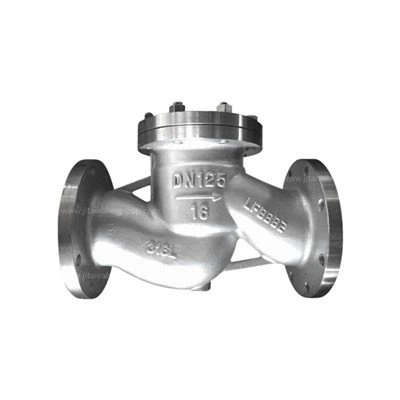
Stainless Steel Lift Check Valves
Add to Inquiry
Stainless Steel Lift Check Valves

The disc of the stainless steel lift check valve is located on the sealing surface of the valve
Carbon Steel Lift Check Valves
Add to Inquiry
Carbon Steel Lift Check Valves

The disc of the carbon steel lift check valve is located on the sealing surface of the valve seat
First 12 Last1/2
 
Why Choose Us
 
01/

One-stop service
We promise to provide you with the fastest reply, the best price, the best quality, and the most complete after-sales service.

02/

Quality Assurance
We have a rigorous quality assurance process in place to ensure that all our services meet the highest standards of quality. Our team of quality analysts checks each project thoroughly before it is delivered to the client.

03/

State-of-the-art Technology
We use the latest technology and tools to deliver high quality services. Our team is well-versed in the latest trends and advancements in technology and uses them to provide the best results.

04/

Competitive Pricing
We offer competitive pricing for our services without compromising on quality. Our prices are transparent, and we do not believe in hidden charges or fees.

Types of Check Valves

Check valves come in different types, each with its unique design and application, as well as advantages and disadvantages. However, some of the most common types of check valves include:


Ball check valves:

These valves use a ball that sits on a seat to allow fluid to flow in one direction but prevent backflow when the fluid flows in the opposite direction.


Inline check valves (Globe-Style Sliding Disc Check Valve):

These valves are installed within the piping system and use a spring-loaded disc to allow fluid to flow in one direction and prevent backflow when fluid flows in the opposite direction.


Swing check valves (Butterfly Check Valve) :

These valves use a swinging disc to allow fluid to flow in one direction and prevent backflow when fluid flows in the opposite direction.


Lift check valves:

These valves use a piston or ball to lift off the seat, allowing fluid to flow in one direction but preventing backflow when the fluid flows in the opposite direction.


Tilting disc check valves:

These valves use a tilting disc to allow fluid to flow in one direction and prevent backflow when fluid flows in the opposite direction.


Wafer check valves:

These valves are installed between flanges and use a spring-loaded disc to allow fluid to flow in one direction and prevent backflow when fluid flows in the opposite direction.

What are Check Valves Used for


They are a standard component, used in multiple industries. They are used to prevent fluid and gas from flowing in the wrong direction. Some of the most common uses include:
In pump outlets to keep water moving in the right direction. Centrifugal pumps, one of the most widely used types of water pump, are not self-priming (they cannot expel air from their tubes before operation) so check valves keep water moving until the air within the pump has been separated from the incoming water and expelled
In heating, ventilation and air conditioning (HVAC) systems, especially those installed in larger buildings. These can require coolant to be pumped up multiple floors and check valves play an important role in beating gravity and ensuring that none of the coolant flows back in the wrong direction
To protect drinking water from exposure to other types of water, or to stop the spread of possibly contaminated water back up the pipe

Oil Swing Check Valves
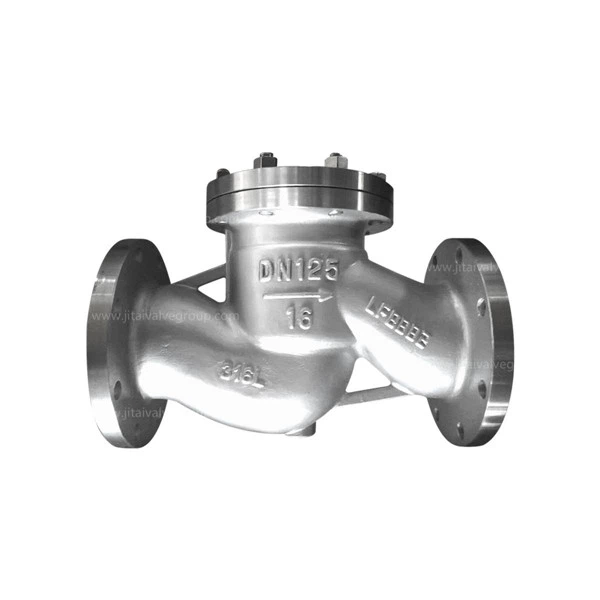
Stainless Steel Lift Check Valves


Properties and applications

They are two-port valves with two openings in the body; one for fluid to go in, while the other is for fluid to leave. Non-return valves are typical of different types. Common variants include the

  • Spring-loaded
  • Swing
  • Clapper
  • Swing check valves.
  • Flap check valves
  • Duckbill
  • Dual Disc check valves
  • Tilted Disc check valves
  • Silent check
  • Ball
How do you choose the right check valve

There are several factors to consider when deciding on a check valve for your needs:

Material Selection:

Material used for valve construction must stand up to piping system and media demands associated with the specific type of gas or liquid flowing through the piping system.

01

Performance Requirements:

Performance considerations include the capability of the valve to handle various temperature and pressure instances.

02

Type and Size:

Selection of the right check valve includes control considerations, typically related to increased safety in hazardous applications as well as sizing the valve to properly accommodate the piping system’s flow conditions.

03

Maintenance:

In addition to considering the frequency of maintenance or replacement, operators must also think about the valve’s resistance to clogging, jamming, or otherwise malfunctioning.

04

Special Requirements:

Check valve selection also includes several special requirements unique to their function, including response time, cracking pressure, normally closed vs. normally open, vertical vs. horizontal mounting, flow direction (upward or downward) and fluid density.

05

Check valves have many advantages over other types of valves
 

They are able to withstand high pressures without leaking or breaking. This means they can be used in high-pressure situations where other types of valves would fail due to excessive pressure.


Check valves can be used with any type of liquid or gas that flows through them. They do not require electricity in order to operate and do not require any special equipment such as pumps or compressors for operation.


The only moving part of a check valve is its ball valve which opens when there is an increase in pressure inside the pipe so that it can allow fluid through but closes when there is a decrease in pressure so that it does not allow any more fluid through it until it has time to adjust again and open again.

Our Factory


Our company has excellent processing and manufacturing equipment, including machining center, CNC lathe, CNC milling machine, CNC drilling machine, large precision vertical lathe and boring machine, plasma spray welding equipment, automatic painting assembly line and other special equipment with an annual production capacity of more than 20000 tons.

20211206133101ea1a968e971742938c24caf228ca1b96
20210726102827d1c23ca5668c4884842a8cce7eba0484
 
FAQ
 

Q: What are Check Valves in Series?

A: When two valves are fitted together, this is known as a double check valve or a check valve in series. They are principally used in water pipelines to prevent contamination. Connecting two valves creates a redundancy so that if one fails or jams, any backflow will still be stopped. Each valve also reduces pressure on the other, creating a firmer seal.

Q: What is the Difference Between a Check Valve and a Non-Return Valve?

A: Since the 1970s, a technical distinction has been made between check valves and non-return valves . The former is a higher performance version of the latter. Non-return valves are normally used in settings where it is desirable to prevent fluids moving in the wrong direction but not crucial to do so - for example, water-based radiators. Despite this, however, the terms check valve and non-return are often used interchangeably.

Q: What is a Non-Return Valve on a Boiler?

A: Steam boilers are common heating solutions. The steam generated by the boiler is circulated around the building in pipes. Heat is emitted by radiators before the steam is eventually vented. Industrial steam boilers are also used in manufacturing processes and to generate electricity. Non-return valves prevent steam from drifting back up into the boiler, which is potentially dangerous, especially if the boiler has failed or been shut down.

Q: What is the purpose of a check valve?

A: The primary purpose of a check valve is to prevent the reverse flow of fluids or gases within a pipeline or system. It ensures that media flows in only one direction, preventing contamination, damage, and inefficiency.

Q: How does a swing check valve work?

A: A swing check valve uses a hinged disc or flap to control flow. When fluid or gas flows in the forward direction, the disc swings open, allowing flow. Reverse flow causes the disc to swing closed, blocking further passage.

Q: How do you calculate the cracking pressure of a check valve?

A: The cracking pressure of a check valve is determined by the valve’s design, spring tension (if applicable), and the force required to overcome friction. It can be calculated using the manufacturer’s specifications or testing equipment.

Q: Can check valves be used for backflow prevention in a sewage system?

A: Yes, check valves are commonly used in sewage systems to prevent the reverse flow of wastewater, which can lead to contamination and system damage.

Q: What materials are commonly used for check valve construction?

A: Materials commonly used for check valve construction include stainless steel, brass, bronze, cast iron, PVC, and various elastomers. The choice of material depends on the fluid or gas being handled and the operating conditions.

Q: How can I prevent check valve failures in my system?

A: To prevent check valve failures, ensure proper material selection, sizing, installation orientation, and maintenance. Regular inspection, cleaning, and replacement of worn components can also extend the lifespan of check valves.

Q: What are some applications of check valves?

A: Check valves are used in piping systems, water supply, sewage transmissions, oil and gas pipelines, firefighting systems, and industrial production.

Q: What is the maximum temperature a check valve can handle?

A: The temperature range can vary from -200°F to 1000°F, depending on the type of valve and materials used.

Q: What are some factors to consider when selecting a check valve?

A: The factors to consider when selecting a check valve include the flow rate, pressure, temperature, media, size, and the type of valve required.

Q: Can check valves get clogged?

A: Yes, check valves can become clogged over time, primarily if used to handle dirty or abrasive media.

Q: What is the installation orientation for a check valve?

A: Check valves should be installed in a vertical position to ensure reliable operation. However, some models can be installed horizontally if specified.

Q: How often should check valves be maintained?

A: Check valves should be inspected periodically and maintained as required. The frequency of maintenance is determined by the application and operating conditions.

Q: Can check valves be repaired?

A: Yes, some check valves can be repaired if the damage is minimal and the parts are available. The repairability of a check valve depends on the design and material used.

Q: What is the warranty of a check valve?

A: The warranty of a check valve depends on the manufacturer and the type of valve. However, most manufacturers offer a one-year warranty on their products.

Q: What is the typical lifespan of a check valve?

A: The service life of a check valve depends on several factors such as the design, materials, installation orientation, and operating conditions. However, most check valves can last up to 10 years or more.

Q: What is the difference between a check valve and a relief valve?

A: A check valve prevents the reverse flow of fluid or gas in a pipeline, while a relief valve relieves pressure that exceeds a preset limit.

Q: Can a check valve be used as a control valve?

A: No, a check valve is not suitable for controlling the flow of fluid or gas in a pipeline. It can only restrict or allow the flow in one direction.

As one of the most professional check valves manufacturers and suppliers in China, we're featured by quality products and good service. Please rest assured to buy customized check valves at competitive price from our factory. For quotation, contact us now.

flow gate valve, gate valve autocad, gate valve blue

(0/10)

clearall