


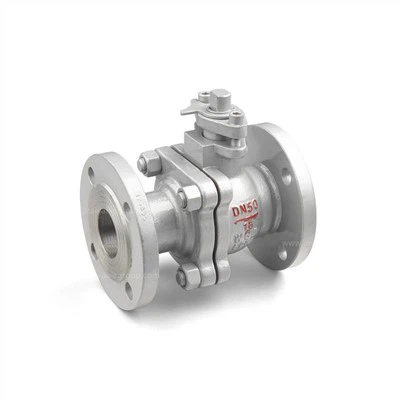
Ball valves are installed throughout piping systems to allow, obstruct, and control the flow of various vapors, gases and liquids. The ball is mounted against two seats and is connected with a shaft to the control mechanism used to rotate the ball. When the port opening is perpendicular to the flow, the fluid is not allowed to pass through the valve. By rotating the port to the open position, fluid is allowed to pass through at a controlled rate.
Benefits of Ball Valves
Easy to Operate
Ball valves are one of the easiest types of valves to operate. They are designed so that a simple turn of the handle is all that is required to open or close the valve. This makes them ideal for use in situations where quick and easy operation is required, such as in emergency shut-off situations
No Leaks
Ball valves are also very reliable and do not tend to leak. This is because the ball inside the valve is held in place by two seals, one at the top and one at the bottom. These seals prevent any fluid from escaping past the ball, even when the valve is in the open position.
Low Maintenance
Ball valves are also low maintenance and do not require much in the way of upkeep. Once they are installed, they can typically be left alone and will continue to work properly for many years. In contrast, other types of valves, such as gate valves, may require periodic lubrication or other maintenance in order to continue working properly.
Durable
Ball valves are also very durable and can withstand a great deal of wear and tear. This is due to their simple design, which has relatively few moving parts that can break or wear out over time. In contrast, more complex valve designs, such as butterfly valves, may have more moving parts that are susceptible to damage or failure over time.



Product Categories


Why Choose Us
One-stop service
We promise to provide you with the fastest reply, the best price, the best quality, and the most complete after-sales service.
Quality Assurance
We have a rigorous quality assurance process in place to ensure that all our services meet the highest standards of quality. Our team of quality analysts checks each project thoroughly before it is delivered to the client.
State-of-the-art Technology
We use the latest technology and tools to deliver high quality services. Our team is well-versed in the latest trends and advancements in technology and uses them to provide the best results.
Competitive Pricing
We offer competitive pricing for our services without compromising on quality. Our prices are transparent, and we do not believe in hidden charges or fees.
Types of Ball Valve
Full Port Ball Valve
Full port ball valves offer maximum flow rate thanks to their large interior diameter. Because they have fewer restrictions than other types of ball valves, full-port ball valves are often used in water systems or other applications where a high flow rate is essential. Additionally, full-port ball valves make it easier to flush out debris. This makes them perfect for systems with many components that require frequent maintenance.
Reduced Port Ball Valve
Reduced port ball valves are smaller than full-port ones and thus have lower flow rates. However, they also cost less than full-port models due to their smaller size and more straightforward construction. Reduced port ball valves are well suited for applications where a low flow rate is sufficient, such as in HVAC systems or water treatment plants. The reduced cost can also benefit tight budgets where every penny counts.
Multi-Port Ball Valve
Multi-Port (or multiway) ball valves feature multiple ports instead of just two, like traditional models, do. This allows them to control various lines at once with only one valve body; this makes installation and maintenance easier than using multiple single-port models for the same purpose. Multiway ball valves are often used in industrial processes where line control is required, but space is limited; they can also be used for mixing or diverting fluids, depending on the application.
V-Port Ball Valve
V port ball valves are an efficient and cost-effective solution for flow control. This type of valve is particularly useful when a precise, adjustable flow rate is required in an application, such as controlling the output of a fluid dispenser or regulating temperature in HVAC systems. V port ball valves feature either a reduced full-flow port allowing for 16 stages of flow control for increased precision, or an equal percentage port which gives ten stages of flow control. Additionally, this type of valve requires very little maintenance, renders tight shutoff and is easily adjustable. All these features make v-port ball valves indispensable tools for many applications in manufacturing and beyond.

A ball valve consists of a ball, body, packing, stem, bonnet, actuator and seat.
It is possible to mount a planetary gearbox between the actuator and stem; this adjustment makes it easier to change the position of large ball valves without applying significant torque.
The seat is manufactured from materials with similar properties to rubber. Typical elastomeric materials used for seat construction include Teflon, Nylon and Neoprene, although there are others. The use of non-metallic materials for the seat prevents ball valves being used in high temperature systems.
The ball is usually made of chrome-plated steel, chrome-plated brass, stainless steel, or PVC. The seats are often made of Teflon but could also be made of other synthetic materials or metals.

Applications That Use Ball Valves
Ball valves are used everywhere from around the home to specialized industries. Here’s a look at a few examples:

Home applications
Washing Machines
Outdoor Hoses
Dishwashers
Specialized industries

Oil & Gas
Food & Beverage Equipment
Automotive
Vehicle Wash Systems
Power Processing
Pharmaceutical
Chemical Admixtures & Treatment
Irrigation & Water Treatment Equipment
Manufacturing Facilities
Ball valve repair and ball valve replacement
When people talk about ball valve advantages and disadvantages, one of the major pros that comes up is the fact that they’re highly durable. Ball valves are recognised for their ability to provide many years of reliable service, particularly the plastic variety, which are obviously not prone to rusting like their metal counterparts.
Of course, as with any component that is under constant strain, damage can occur. Another great advantage of some types of ball valves is that they’re very simple to repair. Thanks to their basic design, you can easily access seals and seats to fix them as and when you need to. Repairs can take place fairly quickly and without intense workmanship.
It’s also worth noting that ball valves, thanks to the regulating elements’design, makes it easy for the component to function without having to worry about side loads, which are often a problem when using butterfly or globe valves. This means that ball valves are less prone to damage than other kinds of valves.
Learn more about types of valves and which to choose for your next project.
In some cases, it’s necessary to replace the ball valve altogether. As they’re affordable and long-lasting, this is a job that shouldn’t cost a fortune or be required too often.
Our company has excellent processing and manufacturing equipment, including machining center, CNC lathe, CNC milling machine, CNC drilling machine, large precision vertical lathe and boring machine, plasma spray welding equipment, automatic painting assembly line and other special equipment with an annual production capacity of more than 20000 tons.


As one of the most professional ball valves manufacturers and suppliers in China, we're featured by quality products and good service. Please rest assured to buy customized ball valves at competitive price from our factory. For quotation, contact us now.
ball check valve stainless steel, steam check valve, 4 swing check valve