


Gate Valves
A gate valve is a type of linear valve used to isolate areas of a water supply. As the name suggests, it acts like a gate that shuts off the flow and opens it again when needed.
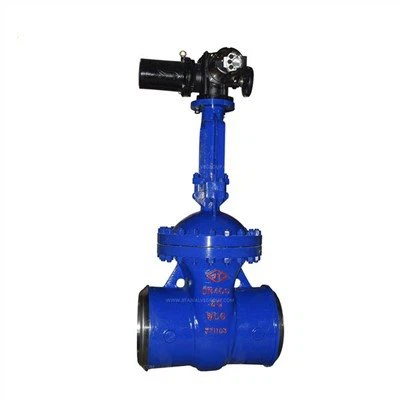
Gate valves work via a gate or wedge that lifts (opens) or lowers (closes) into the path of the flowing liquid. Motion is produced by an actuator that is connected to the stem of the gate, which may be manual, electrically, pneumatically or hydraulically powered. They may have a rising stem, meaning it is fixed to the gate, or a non-rising stem, where it is fixed to the actuator and remains within the valve body. The latter is most commonly used in the waterworks industry and is suitable for underground applications where there is limited vertical space.
Gate valves may also sometimes be referred to as stop valves, line valves, wedge gate valves and sluice valves, but they are not to be confused with sluice gates or penstocks. These are altogether larger devices used to severe the flow of sewage and water in treatment plants and drainage systems, etc
Benefits of Gate Valves
Gate Valves Have Low Fluid Resistance
The gate valve’s body is a straight-through shape that does not alter the flow direction, allowing fluid to pass through the valve (when in the fully open position) with minimal resistance compared to other types of valves.
Gate Valves Provide Superior Sealing Performance
Gate valves provide better sealing performance than shut-off valves. The gate valve’s opening and closing mechanisms are faster and more convenient than those of the shut-off valve.
Gate Valves Have a Wide Application Range
Gate valves are extremely versatile and can be used in applications with mediums like steam, oil, and other media. Plus, gate valves can be used in mediums containing granular solids and with high viscosity. It can also be used as a venting valve and a low vacuum system valve.
Gate Valves are Bidirectional
Gate valves have dual flow directions. They’re not limited to one-way flow, nor are they subject to the flow directions of the medium. Therefore, gate valves are suitable for use in pipelines where the flow direction may change. Plus, they are easier to install than other more sophisticated types of valves.




Product Categories


Why Choose Us
One-stop service
We promise to provide you with the fastest reply, the best price, the best quality, and the most complete after-sales service.
Quality Assurance
We have a rigorous quality assurance process in place to ensure that all our services meet the highest standards of quality. Our team of quality analysts checks each project thoroughly before it is delivered to the client.
State-of-the-art Technology
We use the latest technology and tools to deliver high quality services. Our team is well-versed in the latest trends and advancements in technology and uses them to provide the best results.
Competitive Pricing
We offer competitive pricing for our services without compromising on quality. Our prices are transparent, and we do not believe in hidden charges or fees.
Types of Gate Valves

01
Wedge:
This is a popular option because the gate (shaped like a wedge) does not stick to the seat and offers long-lasting operation.

02
Knife:
Named for how pointy they are, knife gate valves are self-cleaning and work great with thick fluids.

03
Through-Conduit:
Also known as slab gates, this variety is good for natural gas and crude oil because of the minimal pressure loss it allows.

04
Parallel Slide:
This style of valve is meant for high-temperature applications. They are also good at keeping dirt out of the seating surfaces.

The gate valve is purely an isolation valve and is not used to control flow like a globe valve for example. If the valve is only partially opened, the leading edge of the disc will erode over time, especially if the fluid is corrosive or abrasive. This effect is accelerated due to the increased flow velocity over the leading edge due to the restriction created. This means that once the valve is closed to isolate the flow, it will not seal properly and fluid will leak past the worn-out leading edge. The valve does not provide proportional flow control. For example, if the valve is only halfway open, the flow will be larger than 50% of the total flow. The shape of the disc is not designed to impede flow in an optimal manner. This means that partially closing the valve will increase turbulence, which will in turn increase the pressure drop over the valve. When fully open, a gate valve does not impede flow like a butterfly valve, for example.
Gate valves are typically constructed from cast iron, cast carbon steel, ductile iron, gunmetal, stainless steel, alloy steels, and forged steels. All-metal gate valves are used in ultra-high vacuum chambers to isolate regions of the chamber.

What Are the Parts of Gate Valves
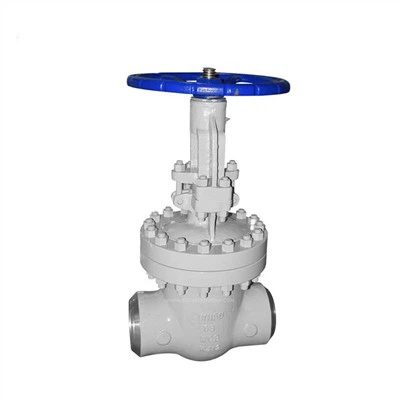
Gate valves consist of a stem, disc, bonnet, and a valve body as described below:
Stem: The stem is used to move the valve to its open and closed positions. This stem can be a screw—in the case of manually actuated valves—or a smooth shaft if actuated by a pneumatic cylinder. The stem is usually sealed using a gland packing seal arrangement or a set of o-rings.
Bonnet: The bonnet of a gate valve sits on the top of the valve body and is where the spindle passes through. The bonnet can usually be removed from the valve body as it is often connected with bolts or threads. The bonnet also houses the gland packing seals that are used to prevent fluid from leaking past the stem.
Actuator: The valve actuator can either be a manually operated handwheel or it can be an automatic actuator like a pneumatic cylinder or geared motor, for example.
Disc: The disc isolates the flow and must be able to hold the pressure of the line when closed. The disc typically slides between two seats to ensure a tight seal with no leaks. There are two main categories of disc, namely wedge or parallel.
Valve Body: The valve body can be cast, forged, or fabricated depending on its application. Gate valve bodies can have many different process connections that can include: flanged, threaded, and welded parts. The valve body has a recess into which the gate slides. The sides of these recesses are called the seat. The gate sits precisely against these faces when it is closed to effectively seal the valve. These seats can either be part of the valve body or they can be replaceable. The material of the valve depends on what fluid the valve will be in contact with. For example, if a gate valve is exposed to corrosive materials then stainless steel might be suitable. Alternatively, for use with water, a brass valve is sufficient.
Gate Valve Used and Applications
Gate valves are often used in almost all fluid services such as air, fuel gas, feedwater, steam, lube oil, hydrocarbon, and almost any services.
Some special type is used in slurry and powder product also, such as knife gate valve.
Metal seated gate valves are commonly used in high temperature applications.

Our company has excellent processing and manufacturing equipment, including machining center, CNC lathe, CNC milling machine, CNC drilling machine, large precision vertical lathe and boring machine, plasma spray welding equipment, automatic painting assembly line and other special equipment with an annual production capacity of more than 20000 tons.


FAQ
Q: What is the difference between a gate valve and a butterfly valve?
Q: Can gate valves be used at end of line?
Q: How are gate valves operated?
Q: How does a gate valve stay closed?
Q: Where is the model and serial number found on a gate valve?
Q: What are the opening and closing speeds of various sized gate valves?
Q: What is the difference between a full bore and reduced bore gate valve?
Q: How often should gate valves be maintained?
Q: Are gate valves suitable for throttling applications?
Q: How can I tell if my gate valve is leaking?
Q: Can gate valves be repaired?
Q: How can I prevent a gate valve from seizing?
Q: Can gate valves be used in corrosive environments?
Q: What is the purpose of a bypass valve in a gate valve system?
Q: What is the difference between a double disc and a single disc gate valve?
Q: Can gate valves be used for slurries or abrasive fluids?
Q: How can I select the right gate valve for my application?
Q: What is the difference between a gate valve and a globe valve?
Q: What is the difference between a gate valve and a ball valve?
Q: Can gate valves be used for cryogenic applications?
As one of the most professional gate valves manufacturers and suppliers in China, we're featured by quality products and good service. Please rest assured to buy customized gate valves at competitive price from our factory. For quotation, contact us now.
stainless steel electric butterfly valve, Carbon Steel Wedge Gate Valves, High Pressure Swing Check Valve