Can fully welded ball valves be used in water treatment plants? Well, as a supplier of Fully Welded Ball Valves, I've gotta say, they're a pretty solid choice. Let's dig into this topic and see why.
First off, what are fully welded ball valves? These valves are made by welding the valve body together. This creates a seamless and robust structure. Unlike some other types of valves, there are no bolts or flanges that could potentially leak. The welding process ensures a tight seal, which is super important in a water treatment plant.
In a water treatment plant, there are different stages of water processing. You've got the intake, where water is drawn from a source like a river or a reservoir. Then there are the treatment steps, like filtration, disinfection, and chemical treatment. Finally, the treated water is distributed. At each of these stages, valves play a crucial role.
Let's start with the intake. The water coming in can be pretty rough, with all sorts of debris and sediment. Fully welded ball valves can handle this harsh environment. They're made of tough materials, like carbon steel. Carbon Steel Fully Welded Ball Valves are known for their strength and durability. They can withstand the pressure of the incoming water and resist corrosion from any chemicals that might be in the water source.
During the treatment process, precise control of the water flow is essential. Fully welded ball valves offer excellent flow control. The ball inside the valve can be rotated to adjust the amount of water passing through. This allows operators to fine - tune the treatment process. For example, when adding chemicals for disinfection, they need to control the flow of water to ensure the right concentration of chemicals. Manual Fully Welded Ball Valves are a great option here. You can easily operate them by hand to make those small adjustments. Check out Manual Fully Welded Ball Valves for more details.
Another important aspect is the prevention of leakage. In a water treatment plant, any leakage can lead to a loss of treated water or the release of untreated water into the environment. Fully welded ball valves have a very low risk of leakage because of their welded construction. This not only saves water but also helps in maintaining the integrity of the treatment process.
Now, let's talk about the distribution stage. Once the water is treated, it needs to be sent out to consumers. The pressure in the distribution pipes can vary, and fully welded ball valves can handle these pressure changes. They can be used to isolate sections of the pipeline for maintenance or in case of an emergency.
Some people might be worried about the cost. Sure, fully welded ball valves might be a bit more expensive upfront compared to some other types of valves. But think about the long - term benefits. They require less maintenance because of their sturdy construction. You won't have to keep replacing gaskets or tightening bolts. Over time, this can save a lot of money for the water treatment plant.
Let's also consider the different types of fully welded ball valves available for water treatment plants. There are also Oil Fully Welded Ball Valves. Even though we're talking about water treatment, these valves can be used in some parts of the plant where there might be a small amount of oil or lubricant involved. For example, in the machinery that pumps the water, there could be some oil - filled components, and these valves can be used to control the flow in those areas.
In addition to the technical advantages, fully welded ball valves are also easy to install. Their compact design means they don't take up a lot of space in the plant. This is important, especially in older plants where space might be limited.

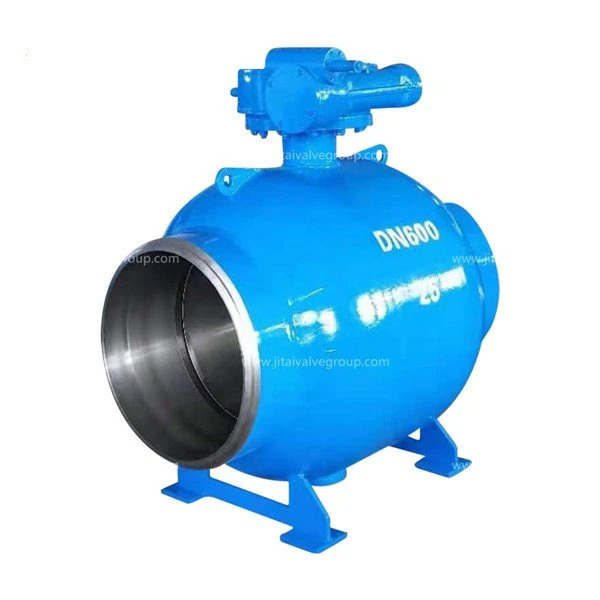
However, it's not all sunshine and rainbows. There are a few things to keep in mind. When choosing a fully welded ball valve for a water treatment plant, you need to make sure it's the right size and pressure rating. A valve that's too small won't be able to handle the flow, and one that's too large can be wasteful. Also, you need to consider the temperature of the water. Some valves are better suited for high - temperature water, while others work better in cold water.
Overall, fully welded ball valves are a great fit for water treatment plants. They offer durability, excellent flow control, and a low risk of leakage. If you're running a water treatment plant or involved in the construction of one, I highly recommend considering fully welded ball valves.
If you're interested in purchasing fully welded ball valves for your water treatment plant, don't hesitate to reach out. We're here to help you choose the right valves for your specific needs. Whether it's for the intake, treatment, or distribution stage, we've got the expertise and the products to meet your requirements.
References
- Valve Handbook: A Guide to Valves and Their Applications
- Water Treatment Plant Design Manual