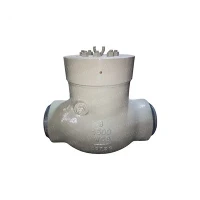
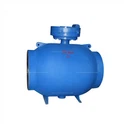
In the realm of industrial applications, straight globe valves are indispensable components, playing a crucial role in fluid control systems across various sectors. As a supplier of Straight Globe Valves, I frequently encounter inquiries regarding their performance, with one question being particularly prominent: What is the leakage rate of straight globe valves?
Understanding Straight Globe Valves
Before delving into the leakage rate, it is essential to understand what straight globe valves are and how they function. A straight globe valve is a type of linear motion valve that controls the flow of a fluid through a pipe. It consists of a movable disk-type element and a stationary ring seat in a generally spherical body. The disk is connected to a stem, which is moved by a handwheel, actuator, or other means of control. When the disk is moved towards the seat, the flow of the fluid is restricted, and when it is moved away, the flow is allowed.
These valves are widely used in applications where flow control and throttling are required, such as in heating, ventilation, and air - conditioning (HVAC) systems, power generation plants, and chemical processing industries. They offer several advantages, including good throttling characteristics, tight shut - off ability, and relatively easy maintenance.
The Concept of Leakage Rate
The leakage rate of a valve is a measure of the amount of fluid that passes through the valve when it is in the closed position. It is typically expressed in units such as cubic centimeters per minute (cc/min) or standard cubic feet per hour (scfh), depending on the application and the industry standards. A lower leakage rate indicates a better - performing valve, as it means that less fluid is escaping past the valve seat when it is supposed to be shut off.
There are different grades of leakage rates defined by various industry standards, such as the American Petroleum Institute (API) standards and the International Organization for Standardization (ISO) standards. These standards classify valves based on their leakage performance, with Class VI being the tightest shut - off class, allowing only a minimal amount of leakage.


Factors Affecting the Leakage Rate of Straight Globe Valves
Seat Design and Material
The design and material of the valve seat have a significant impact on the leakage rate. A well - designed seat with a proper sealing profile can provide a better seal against the disk, reducing leakage. For example, a seat with a smooth and flat surface will make better contact with the disk, resulting in a lower leakage rate.
The material of the seat also plays a crucial role. Soft seat materials, such as elastomers, can provide excellent sealing performance and low leakage rates, especially in applications where a tight shut - off is required. However, they may have limitations in terms of temperature, pressure, and chemical compatibility. Hard seat materials, such as stainless steel or ceramic, are more suitable for high - temperature and high - pressure applications but may have slightly higher leakage rates compared to soft seats.
Disk - to - Seat Fit
The fit between the disk and the seat is another critical factor. If the disk does not fit properly against the seat, there will be gaps through which the fluid can leak. Factors such as manufacturing tolerances, wear and tear, and improper installation can affect the disk - to - seat fit. For instance, if the disk is not centered properly on the seat, it may not form a complete seal, leading to increased leakage.
Operating Conditions
The operating conditions, including temperature, pressure, and the nature of the fluid, can also influence the leakage rate. High temperatures can cause the materials of the valve to expand or contract, which may affect the sealing performance. Similarly, high pressures can put more stress on the valve seat and disk, potentially leading to increased leakage. The chemical properties of the fluid, such as its corrosiveness and viscosity, can also impact the sealing ability of the valve. For example, a highly corrosive fluid can damage the valve seat and disk over time, increasing the leakage rate.
Measuring the Leakage Rate of Straight Globe Valves
Measuring the leakage rate of straight globe valves is a crucial step in ensuring their performance. There are several methods available for measuring leakage, including bubble test, pressure decay test, and mass flow test.
The bubble test is a simple and commonly used method. In this test, the valve is submerged in a liquid, usually water, and pressurized on one side. If there is any leakage, bubbles will form at the point of leakage, allowing the operator to visually detect and estimate the leakage rate.
The pressure decay test involves pressurizing the valve and measuring the rate of pressure drop over a specific period. By analyzing the pressure decay, the leakage rate can be calculated. This method is more accurate than the bubble test but requires more specialized equipment.
The mass flow test measures the actual mass of the fluid leaking through the valve. It is the most accurate method but is also the most complex and expensive, requiring sophisticated flow measurement devices.
Our Straight Globe Valves and Leakage Rate Performance
As a Straight Globe Valves supplier, we are committed to providing high - quality valves with excellent leakage rate performance. Our valves are designed and manufactured using state - of - the - art technology and the highest quality materials.
We conduct rigorous quality control tests during the manufacturing process to ensure that each valve meets or exceeds the industry standards for leakage rate. Our engineers use advanced design techniques to optimize the seat design and the disk - to - seat fit, resulting in valves with low leakage rates.
For applications where a tight shut - off is required, we offer Electric Straight Globe Valve options. These valves are equipped with precise electric actuators that can provide accurate positioning of the disk, further enhancing the sealing performance and reducing the leakage rate.
Why Choose Our Straight Globe Valves
In addition to the excellent leakage rate performance, our straight globe valves offer several other benefits. We provide a wide range of valve sizes and configurations to meet the diverse needs of our customers. Whether you need a small - sized valve for a residential HVAC system or a large - scale valve for an industrial power plant, we have the right solution for you.
Our valves are also known for their durability and reliability. We use high - quality materials that can withstand harsh operating conditions, such as high temperatures, pressures, and corrosive environments. This ensures that our valves have a long service life and require minimal maintenance, reducing the overall cost of ownership for our customers.
Furthermore, we offer excellent customer support. Our team of experts is always ready to assist you with product selection, installation, and maintenance. We can also provide customized solutions based on your specific requirements.
Contact Us for Your Valves Needs
If you are in the market for high - quality straight globe valves with low leakage rates, look no further. We are here to provide you with the best products and services. Contact us today to discuss your requirements and start a procurement negotiation. We are confident that our Straight Globe Valves will meet or exceed your expectations.
References
- American Petroleum Institute (API). API 598: Valve Inspection and Test.
- International Organization for Standardization (ISO). ISO 5208: Industrial valves - Pressure - testing of valves.