Hey there! As a supplier of fully welded ball valves, I often get asked about the difference between fully welded ball valves and semi - welded ball valves. So, I thought I'd take a moment to break it down for you in plain English.
Let's start with the basics. A ball valve is a type of valve that uses a spherical disc to control the flow of fluid through a pipe. It's a pretty common type of valve, and you can find it in a wide range of industries, from oil and gas to water treatment.
Fully Welded Ball Valves
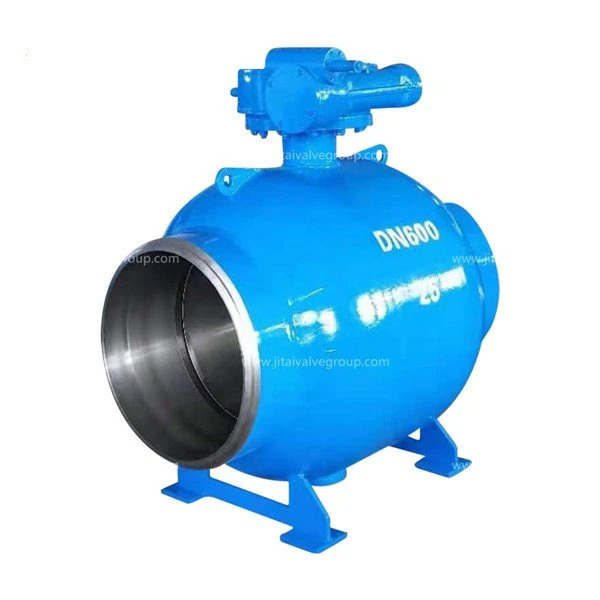
Fully welded ball valves are exactly what they sound like - the valve body is completely welded together. This means there are no bolts, gaskets, or flanges that can potentially leak. The welding process creates a seamless and continuous structure, which offers several advantages.
First of all, fully welded ball valves are extremely durable. They can withstand high pressures and temperatures, making them ideal for harsh environments. For example, in the oil and gas industry, where pipelines often carry fluids at high pressures and temperatures, fully welded ball valves are a popular choice. You can check out our Oil Fully Welded Ball Valves for more details.
Another advantage of fully welded ball valves is their low maintenance requirements. Since there are no external joints or gaskets, there's less chance of leakage, which means less time and money spent on maintenance. And because they're so durable, they tend to have a longer service life compared to other types of valves.
Fully welded ball valves also offer excellent sealing performance. The welded construction ensures a tight seal, which helps to prevent any leakage of the fluid being transported. This is crucial in industries where even a small leak can have serious consequences, such as in chemical processing or nuclear power plants.
We also offer Carbon Steel Fully Welded Ball Valves and Electric Fully Welded Ball Valves. Carbon steel fully welded ball valves are known for their strength and corrosion resistance, while electric fully welded ball valves offer the convenience of remote operation.
Semi - Welded Ball Valves
Semi - welded ball valves, on the other hand, have a different construction. In a semi - welded ball valve, the valve body is made up of two or more parts that are welded together, but there are also some non - welded components, such as flanges or bolts.
One of the main advantages of semi - welded ball valves is their ease of installation. Since they have some non - welded components, they can be more easily assembled and disassembled compared to fully welded ball valves. This can be a big plus in situations where quick installation or replacement is required.
Semi - welded ball valves are also more cost - effective in some cases. Because they use a combination of welded and non - welded components, they can be less expensive to manufacture than fully welded ball valves. This makes them a good option for applications where cost is a major consideration.
However, semi - welded ball valves do have some drawbacks. The non - welded components, such as flanges and gaskets, are potential points of leakage. Over time, these components can wear out or become damaged, which can lead to leaks. This means that semi - welded ball valves generally require more maintenance compared to fully welded ball valves.
Key Differences
Let's summarize the key differences between fully welded ball valves and semi - welded ball valves:

- Durability: Fully welded ball valves are more durable and can withstand higher pressures and temperatures. Semi - welded ball valves are less durable due to the presence of non - welded components.
- Maintenance: Fully welded ball valves have lower maintenance requirements because there are no external joints or gaskets. Semi - welded ball valves require more maintenance because of the potential for leakage at the non - welded components.
- Sealing Performance: Fully welded ball valves offer better sealing performance because of their seamless construction. Semi - welded ball valves may have some leakage issues due to the non - welded components.
- Installation: Semi - welded ball valves are easier to install and disassemble because of the non - welded components. Fully welded ball valves are more difficult to install since they are a single, welded unit.
- Cost: Semi - welded ball valves are generally less expensive to manufacture, making them a more cost - effective option in some cases. Fully welded ball valves are more expensive due to their complex manufacturing process.
Which One Should You Choose?
The choice between fully welded ball valves and semi - welded ball valves depends on your specific application. If you're working in a harsh environment with high pressures and temperatures, and you need a valve that's durable and requires minimal maintenance, then a fully welded ball valve is probably the best choice. On the other hand, if cost is a major concern and you need a valve that's easy to install, then a semi - welded ball valve might be more suitable.
As a supplier of fully welded ball valves, I can help you make the right decision for your application. We have a wide range of fully welded ball valves to meet your needs, and our team of experts can provide you with all the information and support you need.
If you're interested in learning more about our fully welded ball valves or have any questions about the difference between fully welded and semi - welded ball valves, feel free to reach out to us. We'd be more than happy to have a chat with you and discuss your requirements. Whether you're in the oil and gas industry, water treatment, or any other field that requires high - quality valves, we're here to help you find the perfect solution. So, don't hesitate to contact us for a purchase negotiation. We're looking forward to working with you!
References
- Valve Handbook, 4th Edition, by J. S. Netterville
- Industrial Valves: Selection and Sizing, by William E. Boyes