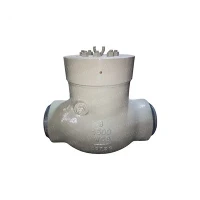
As a supplier of API 602 forged valves, I often receive inquiries about various aspects of these high - quality valves. One question that has come up more frequently recently is about the noise levels generated by API 602 forged valves during operation. In this blog, I will delve into this topic in detail, sharing scientific insights and practical knowledge.
Understanding API 602 Forged Valves
Before discussing the noise levels, it's essential to understand what API 602 forged valves are. API 602 is a standard developed by the American Petroleum Institute (API) that specifies requirements for forged steel gate, globe, and check valves. These valves are widely used in the oil, gas, and petrochemical industries, as well as in other industrial applications where reliable and durable valves are needed.
We offer a wide range of API 602 forged valves, including API 602 Forged Gate Valves, API 602 Forged Check Valves, and API 602 Forged Globe Valves. Each type of valve has its unique design and function, which can affect the noise it generates during operation.
Factors Affecting Noise Levels in API 602 Forged Valves
Several factors can contribute to the noise levels produced by API 602 forged valves during operation.
Fluid Flow
The flow rate and velocity of the fluid passing through the valve play a significant role in noise generation. When the fluid flows at high speeds, it can cause turbulence and cavitation. Turbulence occurs when the fluid's smooth flow is disrupted, creating eddies and vortices. Cavitation, on the other hand, happens when the pressure of the fluid drops below its vapor pressure, causing vapor bubbles to form and then collapse. Both turbulence and cavitation can generate significant noise.
For example, in a high - pressure pipeline, if the valve is partially open, the fluid may be forced through a narrow opening at a very high velocity. This can lead to intense turbulence and cavitation, resulting in a loud, hissing or popping noise.
Valve Design
The design of the valve itself can also impact noise levels. Different valve types, such as gate, globe, and check valves, have different internal geometries that affect how the fluid flows through them.
Gate valves, for instance, typically have a simple design with a flat gate that slides up and down to control the flow. When fully open, gate valves offer a straight - through flow path, which generally results in lower noise levels compared to other valve types. However, if the gate is not fully open or is damaged, it can cause turbulence and noise.
Globe valves, on the other hand, have a more complex internal design with a disk that moves against a seat to control the flow. The flow path in a globe valve is more tortuous, which can lead to higher noise levels, especially at high flow rates.
Check valves are designed to allow fluid to flow in one direction only. The operation of the check valve, such as the opening and closing of the disc, can generate noise, especially if the valve is not properly sized or if the fluid flow is unsteady.
System Pressure
The pressure of the fluid system in which the valve is installed is another important factor. Higher system pressures generally result in higher noise levels. As the pressure increases, the force exerted on the valve components and the fluid becomes greater, which can lead to more intense turbulence and cavitation.
In addition, high - pressure systems may require valves with thicker walls and stronger materials, which can also affect the way the valve behaves acoustically.
Measuring Noise Levels
Measuring the noise levels generated by API 602 forged valves is crucial for ensuring compliance with industry standards and for maintaining a safe and comfortable working environment. There are several methods for measuring noise, but one of the most common is to use a sound level meter.
A sound level meter is a device that measures the intensity of sound in decibels (dB). When measuring the noise level of a valve, it's important to take the measurements at the appropriate locations. Typically, measurements are taken at a distance of 1 meter from the valve and at ear - level height.
It's also important to note that the noise level of a valve can vary depending on the operating conditions. Therefore, multiple measurements should be taken at different flow rates, pressures, and valve positions to get a comprehensive understanding of the valve's noise characteristics.
Controlling Noise Levels
If the noise levels generated by API 602 forged valves are too high, there are several measures that can be taken to control them.
Proper Valve Selection
One of the most effective ways to control noise is to select the right valve for the application. Consider the flow rate, pressure, and fluid characteristics of the system when choosing a valve. For applications where low noise is a priority, gate valves may be a better choice than globe valves, especially at high flow rates.
Valve Sizing
Proper valve sizing is also crucial. An undersized valve can cause high - velocity fluid flow, leading to increased noise levels. On the other hand, an oversized valve may not operate efficiently and can also cause problems. Make sure to size the valve correctly based on the system requirements.
Noise - Reducing Accessories
There are also various noise - reducing accessories available that can be installed on the valve. For example, silencers can be used to reduce the noise generated by the fluid flow. These silencers work by absorbing or dissipating the sound energy.
System Design
The overall design of the fluid system can also affect the noise levels. For example, using larger diameter pipes can reduce the fluid velocity, which in turn can reduce noise. Additionally, proper installation of the valve, including ensuring proper alignment and support, can help minimize noise.
Importance of Managing Noise Levels
Managing the noise levels generated by API 602 forged valves is not just about creating a more comfortable working environment. It also has important implications for safety and equipment reliability.
High noise levels can cause hearing damage to workers if they are exposed to them for extended periods. In addition, excessive noise can be a sign of underlying problems with the valve or the fluid system, such as cavitation or valve damage. By monitoring and controlling the noise levels, we can detect and address these issues early, preventing costly equipment failures and downtime.


Conclusion
In conclusion, the noise levels generated by API 602 forged valves during operation are influenced by several factors, including fluid flow, valve design, and system pressure. Measuring and controlling these noise levels is essential for ensuring compliance with industry standards, maintaining a safe working environment, and ensuring the reliability of the valve and the overall fluid system.
As a supplier of API 602 forged valves, we are committed to providing high - quality valves that meet the needs of our customers. If you have any questions about the noise levels of our valves or if you are interested in purchasing API 602 forged valves, please feel free to contact us for more information and to start a procurement discussion.
References
- American Petroleum Institute. API 602 - Specification for Forged Steel Gate, Globe, and Check Valves.
- Fluid Mechanics textbooks for understanding fluid flow and cavitation principles.
- Industry standards and guidelines related to noise control in industrial applications.