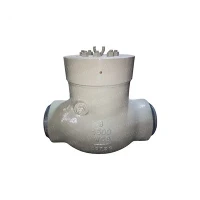
As a supplier of Straight Globe Valves, I understand the critical importance of flow control accuracy in various industrial applications. In this blog, I will share some effective strategies and techniques to enhance the flow control accuracy of straight globe valves, drawing from my years of experience in the industry.


Understanding the Basics of Straight Globe Valves
Before delving into how to improve flow control accuracy, it's essential to have a solid understanding of Straight Globe Valves. These valves are one of the most commonly used types in industrial piping systems. They get their name from the spherical body shape and are designed to regulate the flow of fluids such as water, steam, oil, and various chemicals.
The operation of a straight globe valve is based on the linear movement of a disc against the flow of the fluid. When the valve is opened, the disc is lifted off the seat, allowing fluid to pass through. When the valve is closed, the disc is pressed against the seat, blocking the flow. The degree to which the disc is lifted or lowered determines the flow rate, making precise control of the disc's position crucial for accurate flow control.
Selecting the Right Valve Size
One of the fundamental steps in improving flow control accuracy is selecting the appropriate valve size for the application. An oversized valve can lead to poor flow control because it may cause the valve to operate near the minimum flow capacity, where small changes in the valve opening result in large fluctuations in the flow rate. On the other hand, an undersized valve may restrict the flow, leading to excessive pressure drop and reduced system efficiency.
To select the correct valve size, it is necessary to consider factors such as the required flow rate, the pressure drop across the valve, and the characteristics of the fluid being handled. Consultation with an experienced engineer or valve specialist can be invaluable in ensuring the proper valve size is chosen.
High - Quality Valve Components
The quality of the components used in straight globe valves significantly impacts their flow control accuracy. High - quality discs and seats are essential. The disc should have a smooth surface finish and be made from a material that is resistant to wear, erosion, and corrosion. For example, stainless steel or ceramic discs may be used in applications where there are high - velocity fluids or abrasive particles.
The seat also needs to provide a tight seal when the valve is closed and allow for smooth movement of the disc during operation. A well - machined seat with the correct hardness and surface finish can improve the valve's ability to control flow precisely. Additionally, the stem that connects the disc to the actuator should be straight and have minimal play to ensure accurate positioning of the disc.
Advanced Actuation Systems
The choice of actuation system plays a vital role in enhancing flow control accuracy. Manual actuators, such as handwheels, are suitable for applications where infrequent adjustments are required and the flow rate does not need to be changed rapidly. However, for applications that demand precise and continuous flow control, automated actuation systems are a better option.
Electric Straight Globe Valve actuators offer several advantages. They can be easily integrated with control systems, allowing for remote operation and precise control of the valve position. Electric actuators can provide accurate and repeatable positioning, which is crucial for maintaining a consistent flow rate. They can also be programmed to respond to specific process variables, such as pressure or temperature, ensuring optimal flow control under varying conditions.
Pneumatic actuators are another popular choice. They offer fast response times and can generate high torque, making them suitable for applications where quick valve opening and closing are required. Hydraulic actuators are typically used in high - pressure and high - flow applications, providing significant force for operating large - sized valves.
Flow Characterization
Flow characterization is a technique used to understand the relationship between the valve opening and the flow rate. Different types of valves have different flow characteristics, such as linear, equal percentage, or quick - opening. By selecting a valve with the appropriate flow characteristic for the application, it is possible to achieve more accurate flow control.
For example, in applications where a small change in the valve opening needs to result in a proportional change in the flow rate, a linear - characteristic valve is suitable. In contrast, equal - percentage characteristic valves are better for applications where a large change in the flow rate is required at low valve openings and a smaller change at high valve openings.
Calibration and Maintenance
Regular calibration and maintenance are essential for ensuring the long - term flow control accuracy of straight globe valves. Calibration involves adjusting the valve to ensure that the actual flow rate corresponds to the desired flow rate at different valve openings. This can be done using flow meters and other calibration equipment.
Maintenance activities should include inspecting the valve components for wear, damage, or corrosion. The disc and seat should be checked for proper alignment and sealing. The actuator should be lubricated, and its performance should be tested regularly. Any worn or damaged parts should be replaced promptly to prevent a decline in flow control accuracy.
Monitoring and Feedback Systems
Implementing monitoring and feedback systems can further improve flow control accuracy. Flow meters can be installed in the pipeline to measure the actual flow rate continuously. The data from the flow meters can be sent to a control system, which can then adjust the valve position accordingly to maintain the desired flow rate.
Pressure sensors can also be used to monitor the pressure drop across the valve. A sudden change in the pressure drop may indicate a problem with the valve, such as a blockage or a worn - out seat. By detecting these issues early, corrective actions can be taken to prevent a significant impact on flow control accuracy.
Training for Operators
Proper training for operators is often overlooked but is crucial for achieving accurate flow control. Operators should be trained on the correct operation of the valves, including how to adjust the valve opening, how to read the flow and pressure gauges, and how to recognize signs of valve malfunction. They should also be educated about the importance of following the recommended maintenance procedures to ensure the long - term performance of the valves.
In conclusion, improving the flow control accuracy of straight globe valves requires a comprehensive approach that includes selecting the right valve size, using high - quality components, choosing advanced actuation systems, performing flow characterization, conducting regular calibration and maintenance, implementing monitoring and feedback systems, and providing training for operators.
If you are in need of high - quality Straight Globe Valves for your industrial applications and want to discuss how to optimize the flow control accuracy in your system, feel free to reach out. We are always ready to help you find the best solutions for your specific needs.
References
- Valve Handbook, published by Crane Co.
- Industrial Flow Control Technology, various industry technical papers.
- Standards and Guidelines for Valve Selection and Installation, provided by industry associations.