Can lift check valves be used in corrosive environments? That's a question I get asked a lot as a supplier of Lift Check Valves. In this blog, I'll share some insights to help you figure out if these valves are the right fit for your corrosive - environment needs.
First off, let's understand what lift check valves are. They're a type of check valve that allows fluid to flow in one direction only. When the fluid flows in the right direction, it lifts the disc off its seat, enabling the flow. When the flow stops or reverses, the disc drops back onto the seat, preventing backflow. Simple, right?
Now, when it comes to corrosive environments, things get a bit tricky. Corrosive substances can eat away at the materials of a valve over time, leading to leaks, reduced performance, and even complete failure. So, can lift check valves stand up to this challenge?
The answer is: it depends on the materials. We offer different types of lift check valves made from various materials, each with its own resistance to corrosion.
One of the popular options is Stainless Steel Lift Check Valves. Stainless steel is known for its excellent corrosion resistance. It contains chromium, which forms a passive oxide layer on the surface. This layer acts as a shield, protecting the underlying metal from corrosive agents. For mild to moderately corrosive environments, like those with low - concentration acids or alkalis, stainless steel lift check valves are a great choice. They can withstand the chemical attack and keep working for a long time.
However, not all stainless steels are created equal. Different grades have different levels of corrosion resistance. For example, some high - alloy stainless steels are more resistant to pitting and crevice corrosion in chloride - rich environments. So, when you're choosing a stainless steel lift check valve, it's important to consider the specific corrosive substances in your environment and pick the right grade of stainless steel.
Another option is Carbon Steel Lift Check Valves. Carbon steel is strong and relatively inexpensive, but it's not as corrosion - resistant as stainless steel. In general, carbon steel lift check valves are not suitable for highly corrosive environments. But in some cases, they can be used if the environment is only slightly corrosive or if proper protective coatings are applied. Coatings like epoxy or zinc can provide an extra layer of protection, preventing the carbon steel from coming into direct contact with the corrosive agents.


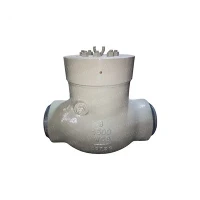
If you're dealing with a high - pressure and corrosive environment, you might be interested in High Pressure Lift Check Valve. These valves are designed to handle high - pressure applications while also providing some level of corrosion resistance. The materials used in high - pressure lift check valves are carefully selected to ensure they can withstand both the pressure and the corrosive substances.
But there are other factors to consider besides the material. The design of the lift check valve also matters. A well - designed valve will have smooth internal surfaces, which reduce the chances of corrosion products accumulating. It will also have proper sealing mechanisms to prevent leaks, which can expose the valve to more corrosive agents.
The operating conditions in the corrosive environment are also crucial. Temperature, flow rate, and the concentration of the corrosive substances all play a role. For example, higher temperatures can accelerate the corrosion process. So, if your environment has high temperatures, you need to choose a valve material that can handle the heat and still resist corrosion.
Let's talk about some real - world applications. In the chemical processing industry, lift check valves are often used in pipelines carrying corrosive chemicals. Stainless steel lift check valves are commonly installed in systems handling acids like sulfuric acid or hydrochloric acid. They ensure that the chemicals flow in the right direction and prevent backflow, which could cause dangerous reactions.
In the water treatment industry, carbon steel lift check valves with protective coatings can be used in systems where the water has a low level of corrosiveness. They help maintain the proper flow of water and prevent contamination.
So, to sum it up, lift check valves can be used in corrosive environments, but you need to choose the right valve based on the specific conditions. As a supplier, I've seen many customers make the wrong choice, which led to valve failures and costly replacements. That's why I'm here to help you make an informed decision.
If you're still not sure which lift check valve is right for your corrosive - environment application, don't hesitate to reach out. I've got years of experience in this field, and I can offer you personalized advice. Whether you need a stainless steel lift check valve for a chemical plant or a carbon steel one with a coating for a water treatment facility, I can help you find the perfect solution.
If you're interested in purchasing lift check valves, or if you have any questions regarding their use in corrosive environments, feel free to get in touch. We can discuss your specific requirements and come up with the best valve option for you. Let's work together to ensure your systems run smoothly and efficiently in even the toughest corrosive conditions.
References:
- "Handbook of Valves" - A comprehensive guide on valve types, materials, and applications.
- "Corrosion Resistance of Metals and Alloys" - A technical resource on how different metals react to corrosive substances.