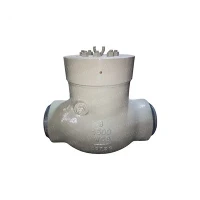
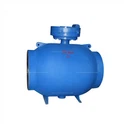
As a supplier of fully welded ball valves, I've often been asked about the feasibility of using these valves in automotive manufacturing. In this blog post, I'll explore the characteristics of fully welded ball valves, the requirements of automotive manufacturing, and whether these two can be a good match.
Understanding Fully Welded Ball Valves
Fully welded ball valves are known for their robust construction and excellent performance in various industrial applications. They are designed with a one-piece body that is fully welded, eliminating potential leakage points that are common in flanged or threaded connections. This design makes them highly reliable and suitable for high-pressure and high-temperature environments.
There are different types of fully welded ball valves available, each tailored to specific applications. For instance, Steam Fully Welded Ball Valves are specifically engineered to handle the challenges associated with steam systems. They are made from materials that can withstand high temperatures and pressures, ensuring long-term performance in steam applications.
Pneumatic Fully Welded Ball Valves are another type, which are actuated by compressed air. These valves offer quick and precise control, making them ideal for applications where rapid valve operation is required.
Oil Fully Welded Ball Valves are designed to meet the demanding requirements of the oil and gas industry. They are resistant to corrosion and erosion, ensuring reliable performance in harsh oil and gas environments.
Requirements in Automotive Manufacturing
Automotive manufacturing involves a wide range of processes and systems, each with its own set of requirements. Valves play a crucial role in many of these systems, including fuel delivery, coolant circulation, and pneumatic control.
In fuel delivery systems, valves need to be highly reliable to ensure the safe and efficient transfer of fuel. They must be able to withstand the pressure and temperature variations associated with fuel flow, as well as resist corrosion from the fuel itself.
Coolant circulation systems require valves that can accurately control the flow of coolant to maintain the optimal operating temperature of the engine. These valves need to be precise in their operation and durable enough to withstand the constant flow of coolant.
Pneumatic control systems in vehicles use valves to control the flow of compressed air for various functions, such as actuating brakes and operating door locks. These valves need to be responsive and reliable to ensure the proper functioning of these systems.
Can Fully Welded Ball Valves Be Used in Automotive Manufacturing?
The answer to this question is not a simple yes or no. While fully welded ball valves offer many advantages, there are also some factors that need to be considered before using them in automotive manufacturing.
One of the main advantages of fully welded ball valves is their high reliability. The fully welded design eliminates potential leakage points, which is crucial in automotive applications where safety is a top priority. For example, in fuel delivery systems, any leakage of fuel can pose a significant safety hazard. A fully welded ball valve can provide a secure and leak-free solution, ensuring the safe transfer of fuel.
Another advantage is their durability. Fully welded ball valves are made from high-quality materials that can withstand high pressures, temperatures, and corrosion. This makes them suitable for use in automotive systems that operate under harsh conditions, such as coolant circulation systems.
However, there are also some challenges associated with using fully welded ball valves in automotive manufacturing. One of the main challenges is their size and weight. Fully welded ball valves are typically larger and heavier than other types of valves, which may not be suitable for some automotive applications where space and weight are critical factors.
Another challenge is the cost. Fully welded ball valves are generally more expensive than other types of valves due to their complex manufacturing process and high-quality materials. This may make them less cost-effective for some automotive manufacturers, especially those on a tight budget.
Potential Applications in Automotive Manufacturing
Despite the challenges, there are some potential applications where fully welded ball valves could be used in automotive manufacturing.
In high-performance vehicles, where reliability and durability are of utmost importance, fully welded ball valves could be used in critical systems such as fuel delivery and coolant circulation. These valves can provide the high level of performance and safety required for these applications.
In electric vehicles, which are becoming increasingly popular, fully welded ball valves could be used in the cooling systems for the battery and electric motor. These systems require precise control of the coolant flow to maintain the optimal operating temperature, and fully welded ball valves can provide the accuracy and reliability needed.
Conclusion
In conclusion, while fully welded ball valves offer many advantages in terms of reliability and durability, their use in automotive manufacturing is not without challenges. The size, weight, and cost of these valves need to be carefully considered before deciding whether they are suitable for a particular automotive application.
However, there are some potential applications where fully welded ball valves could be a good fit, especially in high-performance and electric vehicles. As automotive technology continues to evolve, it's possible that the use of fully welded ball valves in automotive manufacturing may become more widespread.


If you're an automotive manufacturer or involved in the automotive industry and are interested in exploring the use of fully welded ball valves in your applications, I encourage you to contact us. We have a team of experts who can provide you with more information and help you determine whether fully welded ball valves are the right solution for your needs.
References
- "Valve Handbook" by Butterworth-Heinemann
- "Automotive Engineering Fundamentals" by SAE International