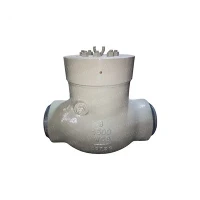
Are oil swing check valves suitable for viscous oils? That's a question I get asked a lot as a supplier of Oil Swing Check Valves. And it's a good one, because choosing the right valve for your application can make a huge difference in performance and efficiency.
Let's start by understanding what oil swing check valves are. These valves are designed to allow fluid to flow in one direction only. They work on a simple principle: when the fluid flows in the correct direction, it pushes the valve disc open, allowing the fluid to pass through. When the flow reverses, the disc closes, preventing backflow.
Now, when it comes to viscous oils, things get a bit more complicated. Viscosity is a measure of a fluid's resistance to flow. The higher the viscosity, the thicker the fluid and the more difficult it is to move. So, are oil swing check valves up to the task of handling these thick, sticky oils?
The Pros of Using Oil Swing Check Valves for Viscous Oils
One of the main advantages of oil swing check valves is their simple design. They have few moving parts, which means there's less that can go wrong. This simplicity also makes them relatively easy to install and maintain. And in a system dealing with viscous oils, where clogging and fouling can be a problem, having a valve that's easy to clean and service is a big plus.
Another benefit is their ability to handle high-pressure applications. Viscous oils often require higher pressures to move through a system, and oil swing check valves are built to withstand these pressures. They can effectively prevent backflow even under high-pressure conditions, which is crucial for maintaining the integrity of the system.
The Cons of Using Oil Swing Check Valves for Viscous Oils
However, there are also some challenges when using oil swing check valves with viscous oils. One of the biggest issues is the potential for the valve disc to stick. Viscous oils can coat the valve disc and the seat, making it difficult for the disc to open and close properly. This can lead to incomplete sealing, which may result in leakage and reduced efficiency.

Another problem is the increased resistance to flow. Viscous oils already have a high resistance to flow, and the presence of a check valve can further impede the flow. This can cause pressure drops in the system, which may require additional pumping power to maintain the desired flow rate.
Factors to Consider
So, how do you decide if oil swing check valves are suitable for your viscous oil application? Here are some factors to consider:
- Viscosity Level: The first thing you need to know is the viscosity of your oil. If the oil is only slightly viscous, an oil swing check valve may work just fine. But if the oil is extremely thick, you may need to look for alternative valve designs.
- Flow Rate: The flow rate of your system is also important. Higher flow rates can help overcome the resistance caused by the viscosity of the oil and the valve. If your system has a low flow rate, you may experience more problems with valve sticking and pressure drops.
- Operating Pressure: As mentioned earlier, oil swing check valves are designed to handle high pressures. But you need to make sure that the valve's pressure rating is suitable for your application. If the pressure is too high, it can damage the valve, and if it's too low, the valve may not function properly.
- Temperature: Temperature can also affect the viscosity of the oil. As the temperature increases, the viscosity of most oils decreases. So, if your system operates at high temperatures, the oil may be less viscous, which can make it easier for the valve to operate.
Alternatives to Oil Swing Check Valves for Viscous Oils
If you find that oil swing check valves are not suitable for your viscous oil application, there are some alternatives you can consider. For example, Steam Swing Check Valves are designed to handle high-temperature and high-pressure steam, but they can also be used in some viscous oil applications. They have a similar design to oil swing check valves but are made from materials that can withstand the harsh conditions of steam and viscous fluids.
Another option is Stainless Steel Swing Check Valves. These valves are made from stainless steel, which is resistant to corrosion and can handle a wide range of temperatures and pressures. They are also easy to clean and maintain, which is important when dealing with viscous oils.

Making the Right Choice
In conclusion, whether oil swing check valves are suitable for viscous oils depends on several factors. While they have some advantages, such as simplicity and high-pressure resistance, they also have some limitations, such as potential sticking and increased flow resistance. By carefully considering the viscosity, flow rate, operating pressure, and temperature of your system, you can make an informed decision about whether an oil swing check valve is the right choice for you.
If you're still not sure, or if you need more information about our Oil Swing Check Valves, feel free to reach out to us. Our team of experts is always ready to help you find the best valve solution for your application. We can provide you with detailed product specifications, performance data, and installation advice. So, don't hesitate to contact us for a friendly chat and let's start a procurement discussion.

References
- Valve Handbook, 4th Edition, by Robert E. McCarthy
- Fluid Mechanics for Engineers, 3rd Edition, by Frank M. White
- Industrial Valves: Selection, Application, and Maintenance, by John R. Bannister