


Hey there, folks! As a supplier of fully welded ball valves, I've been getting a lot of questions lately about how to evaluate the energy efficiency of these valves. So, I thought I'd put together this blog post to share some insights.
Why Energy Efficiency Matters
Before we dive into the evaluation methods, let's talk about why energy efficiency is such a big deal for fully welded ball valves. In today's world, where energy costs are rising and environmental concerns are mounting, using energy-efficient equipment is crucial. Fully welded ball valves are used in a wide range of industries, including oil and gas, water treatment, and power generation. In these industries, even a small improvement in valve energy efficiency can lead to significant cost savings and a reduced carbon footprint.
Evaluating the Energy Efficiency of Fully Welded Ball Valves
1. Pressure Drop
One of the key factors in evaluating the energy efficiency of a fully welded ball valve is the pressure drop across the valve. Pressure drop refers to the difference in pressure between the inlet and the outlet of the valve when fluid is flowing through it. A lower pressure drop means that the valve is allowing fluid to flow more easily, which requires less energy from the pumping system.
To measure the pressure drop, you can use pressure gauges installed at the inlet and outlet of the valve. Compare the pressure drop of different valves under the same flow conditions. Valves with a lower pressure drop are generally more energy-efficient. For example, if you're comparing two valves in an oil pipeline, and Valve A has a pressure drop of 2 psi while Valve B has a pressure drop of 5 psi, Valve A is likely to be more energy-efficient, as it allows the oil to flow with less resistance. You can check out our Oil Fully Welded Ball Valves to see how our products perform in terms of pressure drop.

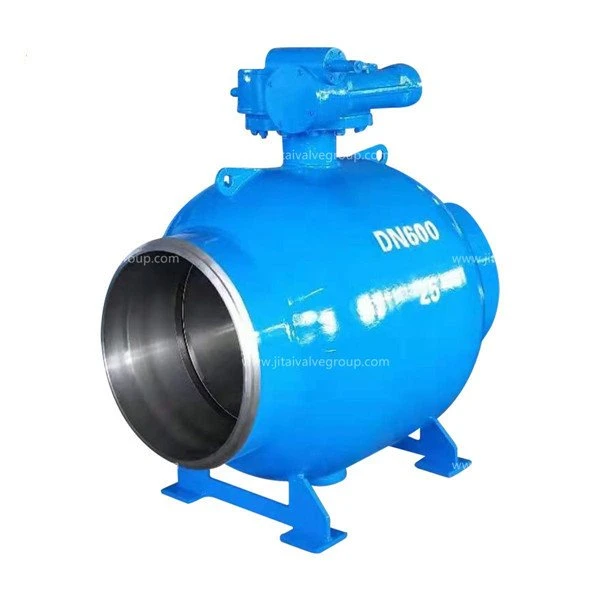
2. Leakage Rate
Another important aspect is the leakage rate of the valve. Even a small amount of leakage can waste energy over time. Leakage can occur through the valve seat, stem, or body joints. To evaluate the leakage rate, you can use specialized equipment such as ultrasonic leak detectors or pressure decay testing.
A valve with a lower leakage rate is more energy-efficient because it doesn't allow the fluid to escape, ensuring that all the energy used to move the fluid is utilized effectively. For instance, in a water treatment plant, if a valve has a high leakage rate, it means that water is being wasted, and the pumping system has to work harder to maintain the required flow rate. Our Stainless Steel Fully Welded Ball Valves are designed to have low leakage rates, which helps in improving energy efficiency.
3. Actuator Efficiency
If the fully welded ball valve is equipped with an actuator (such as a motorized or pneumatic actuator), the efficiency of the actuator plays a role in the overall energy efficiency of the valve. An efficient actuator can open and close the valve with less energy consumption.
When evaluating actuator efficiency, look at factors such as the power consumption of the actuator, the speed of operation, and the accuracy of positioning. For example, a motorized actuator with a high - efficiency motor and a well - designed gearbox will consume less electricity to operate the valve. Check out our Manual Fully Welded Ball Valves for those cases where a simple, energy - efficient manual operation is preferred.
4. Material and Design
The material used in the construction of the valve and its design also impact energy efficiency. For example, valves made of high - quality materials that have low friction coefficients can reduce the energy required to operate the valve. A well - designed valve with a smooth internal surface can also minimize fluid turbulence, which in turn reduces pressure drop.
Stainless steel is a popular choice for fully welded ball valves because it is corrosion - resistant and has good mechanical properties. The smooth surface of stainless steel valves helps in reducing friction and pressure drop. Additionally, advanced design features such as a streamlined ball and seat can improve the flow characteristics of the valve, making it more energy - efficient.
Real - World Examples
Let's take a look at a couple of real - world examples to illustrate the importance of evaluating energy efficiency. In an oil refinery, a fully welded ball valve was replaced with a more energy - efficient model. The new valve had a lower pressure drop and a lower leakage rate. As a result, the refinery was able to reduce its pumping energy consumption by 15%, which translated into significant cost savings over a year.
In a municipal water supply system, the installation of energy - efficient manual fully welded ball valves led to a reduction in water leakage. This not only saved water but also reduced the energy required to pump water to the consumers.
How We Can Help
As a supplier of fully welded ball valves, we are committed to providing products that are not only high - quality but also energy - efficient. Our team of experts can help you evaluate which valve is the best fit for your specific application based on the energy efficiency criteria we've discussed.
Whether you need a valve for an oil pipeline, a water treatment plant, or a power generation facility, we can offer you a range of options to choose from. We conduct thorough testing on our valves to ensure that they meet the highest standards of energy efficiency.
If you're interested in learning more about our fully welded ball valves or have any questions about evaluating energy efficiency, don't hesitate to reach out. We'd be more than happy to engage in a discussion and help you find the right solution for your needs. Let's work together to make your operations more energy - efficient and cost - effective!
References
- Crane Technical Paper No. 410: Flow of Fluids Through Valves, Fittings and Pipe
- ASME Boiler and Pressure Vessel Code Section VIII: Rules for Construction of Pressure Vessels


